Liquidity
The cash decisions a spreadsheet can't model
We were asked to make an Excel liquidity sheet pretty enough to sell as a SaaS. We found the thing that actually made it valuable, and built the product on that instead.
The brief, and the brief behind it
The client named the risk before we did.
You can glorify a spreadsheet, but a glorified spreadsheet will never beat Excel on functionality. The user experience is what will make this product.
So the work wasn't redrawing a grid of cells. It was finding what this product could do that a spreadsheet cannot, and making it legible enough that a room could decide, in one meeting, whether to fund it.
What was actually in the sheet
Two walkthroughs with the person who built it. It wasn't a budget. It encoded a national cash calendar: bimonthly VAT charged on what you invoiced rather than collected, employer fees held in an account you can't withdraw from, an annual July holiday-pay hit that bankrupts small firms, and one more thing that wasn't written down anywhere.
Every income figure was typed in a colour, and the colour meant how much you could trust it: black paid, blue invoiced, pink certain, yellow doubtful, red for what the owner called "wonderland".
That colour code was the product. A five-tier vocabulary for how much a number can be trusted, living only as conditional formatting inside one person's file.
The decision
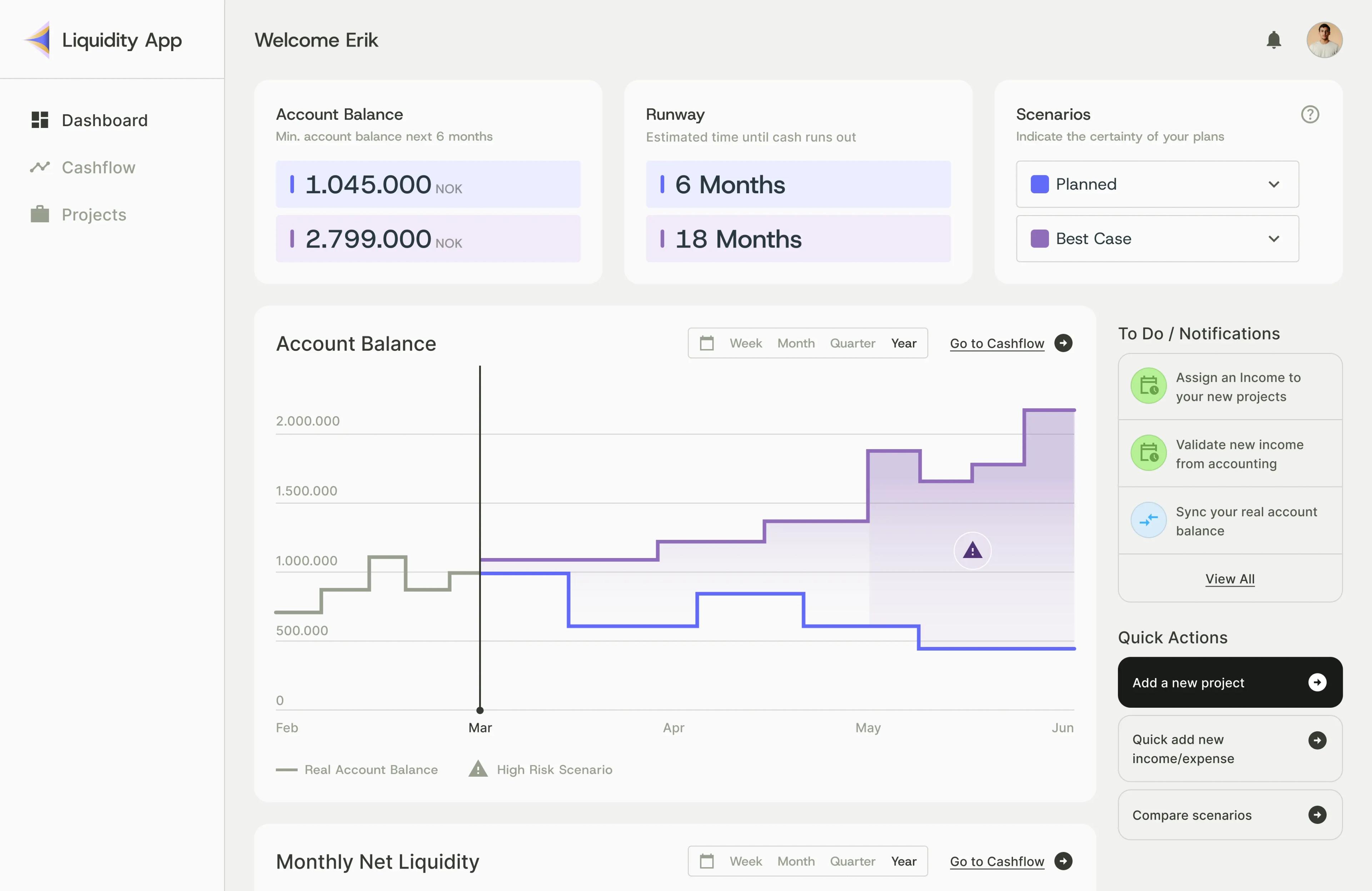
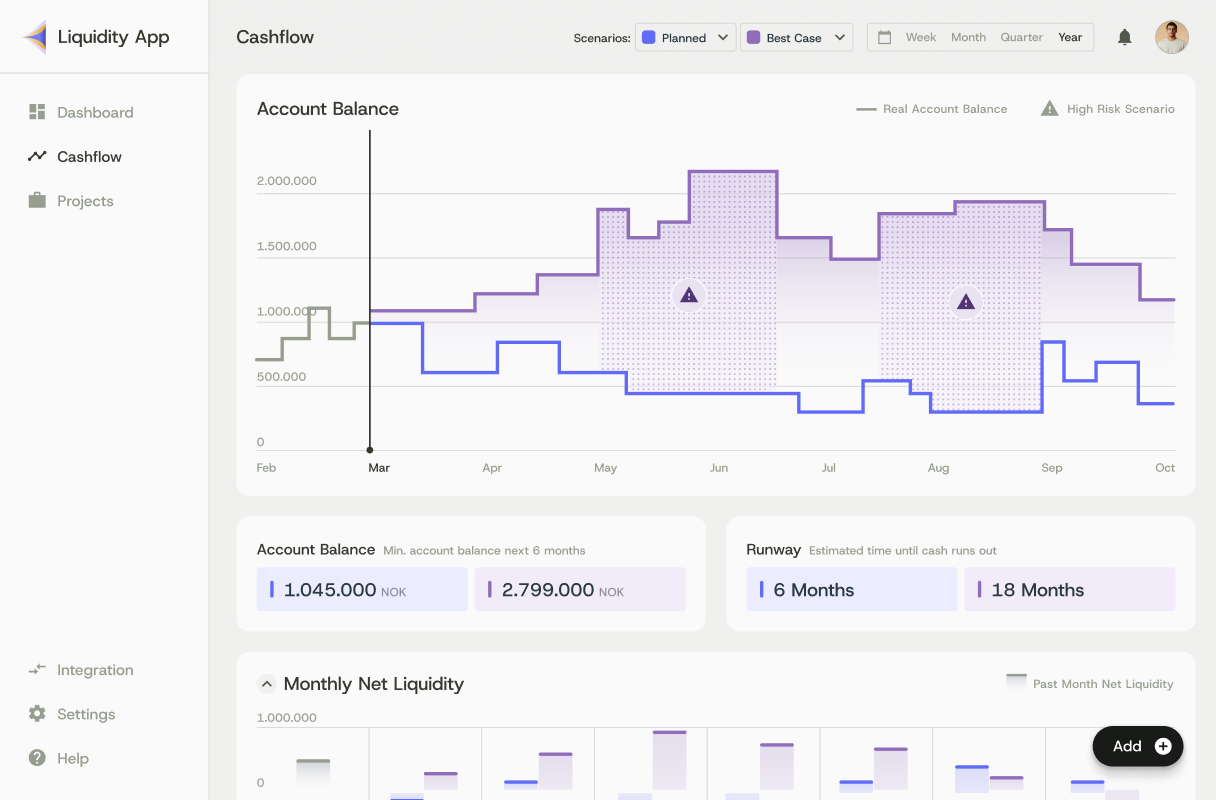
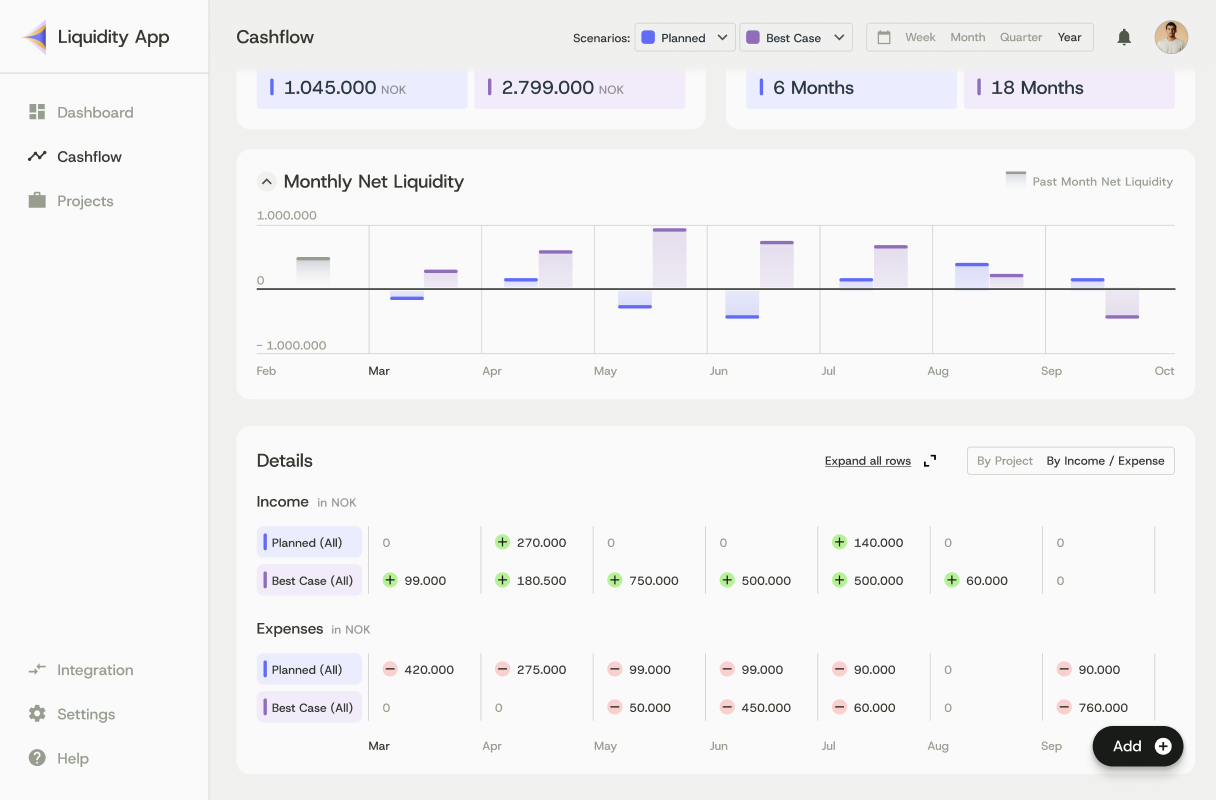
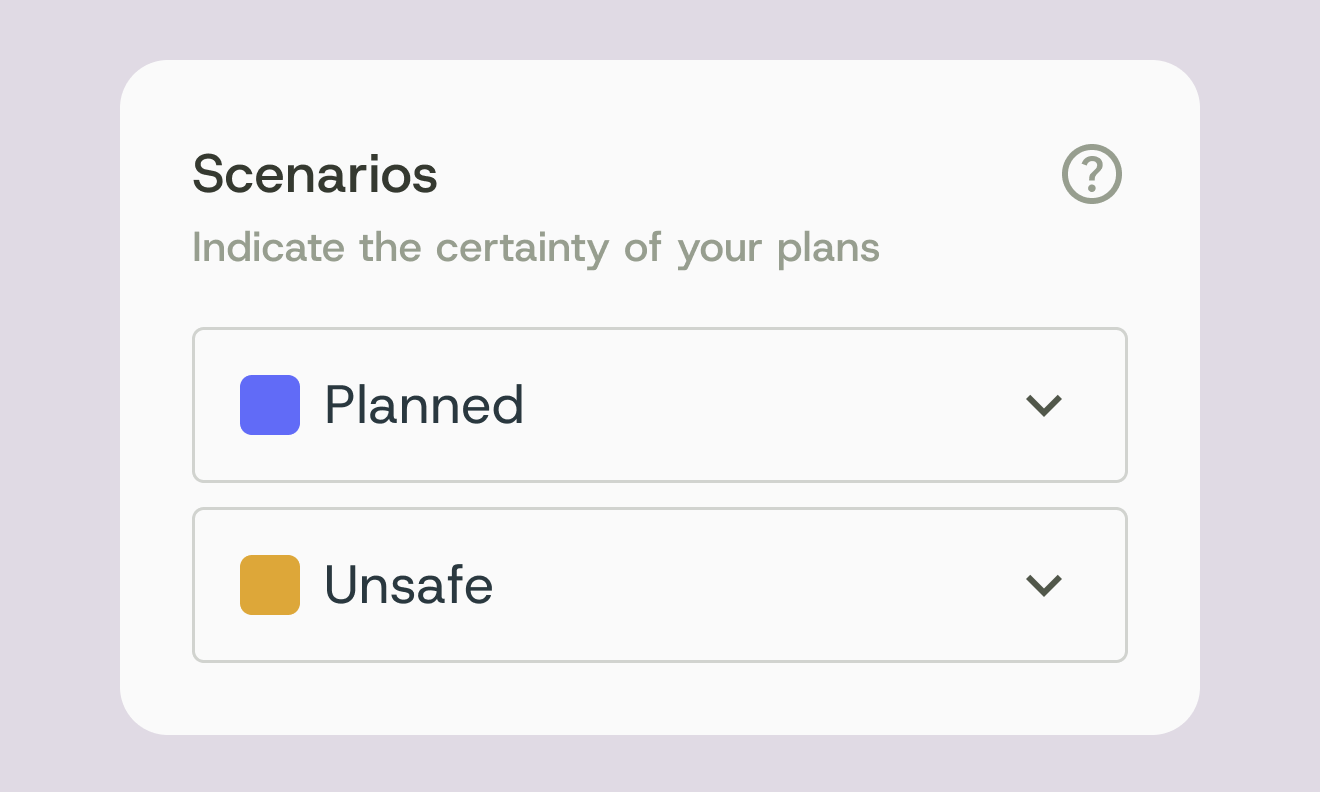
Promote certainty from formatting convention to system primitive: four named scenarios (Paid, Planned, Unsure, Best Case) attached to every amount the user enters.
- Comparing futures stops requiring a duplicate workbook. It becomes two dropdowns, and the model stays single-source.
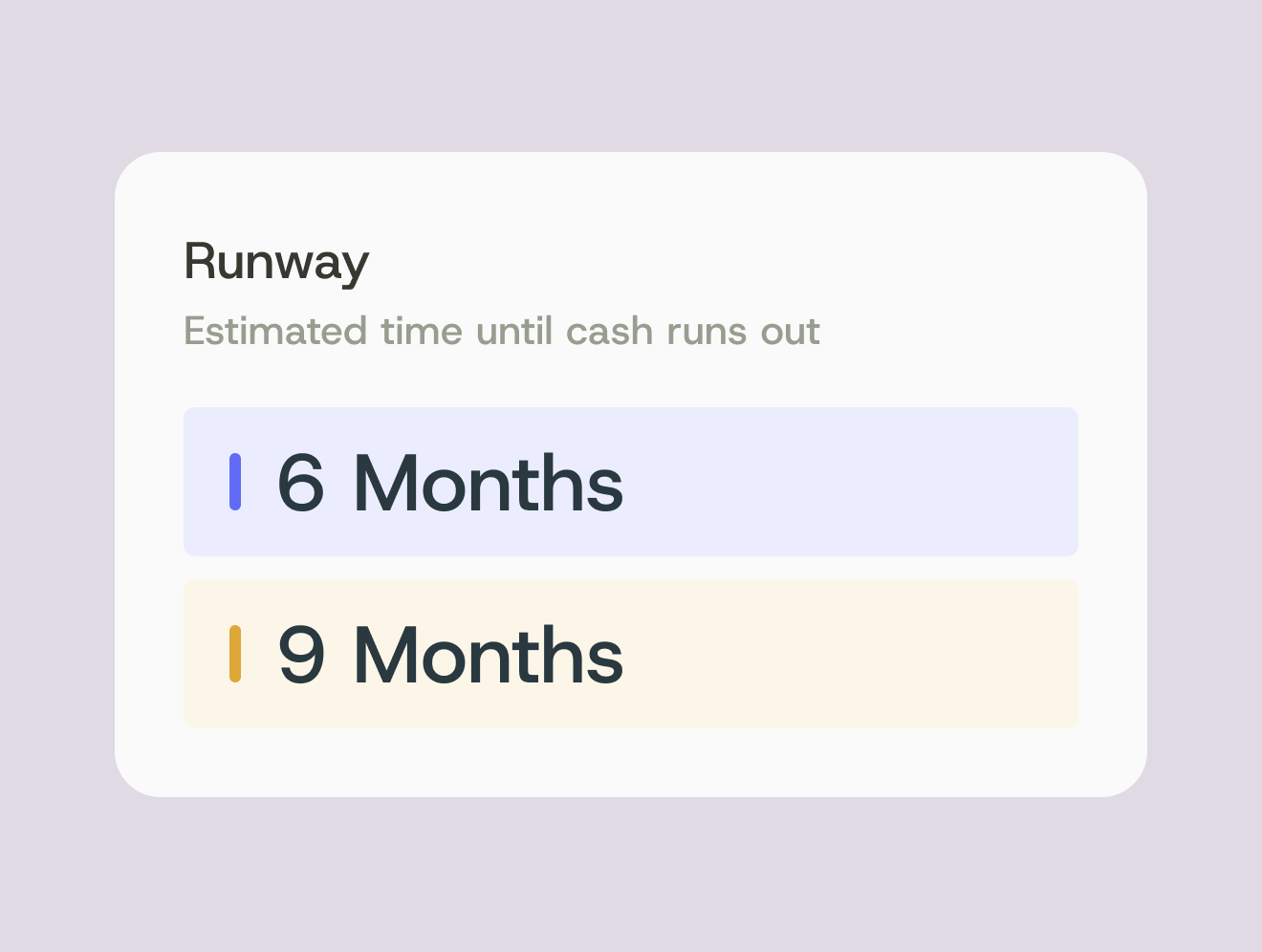
- Runway becomes a range, not a number. Eighteen months of best case, six of planned. The gap between them is the decision.
- Risk becomes drawable. Hatched months mark the forecast being carried by money nobody has promised.
Positioning
The category drifts upmarket. Every product built for small businesses accretes modelling power until it belongs to a finance team, which leaves the original user behind: the owner of a five-person studio deciding in March whether she can afford to hire in May.
Stay narrow: cashflow, budgeting, forecasting, nothing else. Don't compete on modelling power against Excel or Runway. Compete on certainty, the one dimension neither of them names.
Why it worked
The spreadsheet was never broken. It was a system that had worked long enough to accumulate complexity, and the complexity, not the styling, was the product. Two weeks produced a defensible position, one idea a stakeholder could repeat, and screens that made it visible at a glance.
We design systems, not screens.
